Home / Undercarriage guide
Owner's guide
Dozer Undercarriage Guide: What to Check Before You Sell
The undercarriage can be a big share of a dozer's value. Check yours in ten minutes, no gauge needed.
Free offer · No obligation
Get your dozer offer
About a minute. We call back with a number.
- No gauge needed
- What to photograph
- What wear means
The parts
Know what you're looking at
Ten-minute check
Look at these
Sprocket teeth
Hooked or thin means wear.
Track sag
Low hang means a stretched chain.
Bottom rollers
Flat spots, leaks, not turning.
Carrier roller
A seized one cuts the chain.
Idlers
Tread wear, leaking bearings.
Grousers
Bar height left on the shoes.
Pins and bushings
Outer wear where the sprocket meets.
Track frame
Cracks near the recoil spring.
Dozer sitting idle? Get a number in minutes.
Photos that help
Six shots
- 1. Each side, square on, from a few metres
- 2. Both sprockets close up
- 3. The front idler
- 4. A bottom roller from below
- 5. Track sag, with something for scale
- 6. Shoes and grousers, straight on
Soft ground and LGP
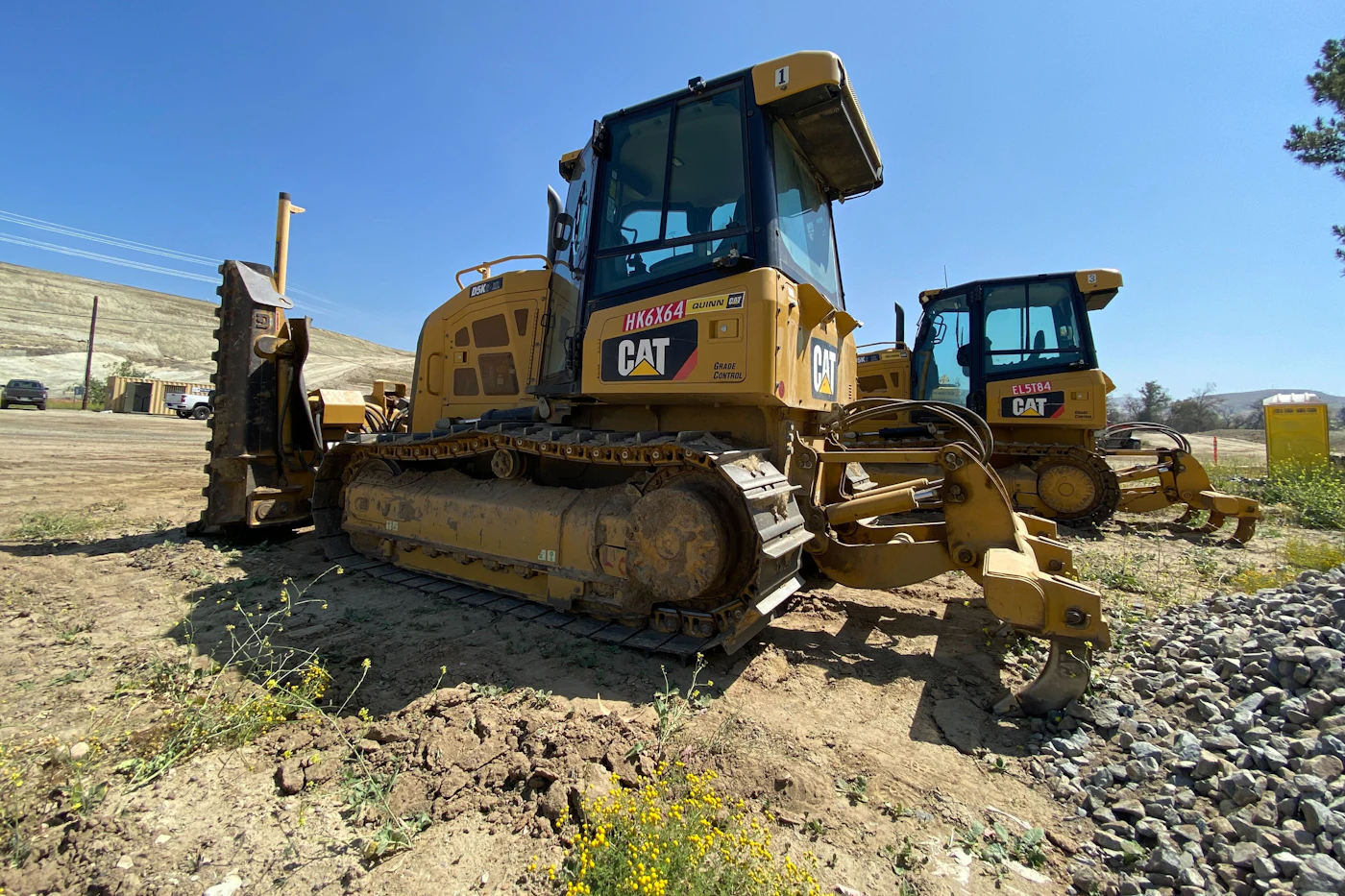
Wide-pad LGP dozers float on peat and wet valley ground, so they hold value here. More in the value guide.
Questions
Undercarriage questions
Do I need a wear gauge to check my undercarriage?
No. A gauge gives exact numbers, but clear photos of the sprocket, rollers, idlers and track sag tell us most of what we need.
What does SALT mean?
Sealed and lubricated track. The pins and bushings in each link are sealed with oil inside, which slows internal wear. A dry or leaking SALT chain wears faster.
Should I replace the undercarriage before selling?
Almost never. A new undercarriage is a big bill and you rarely get it all back in the sale price. Sell it as is and let the next owner decide.
What does turning pins and bushings mean?
On many dozers, the pins and bushings can be pressed out and rotated so a fresh side takes the wear. It extends the life of the chain once.